

Introduction: The Day That Shook Submission Grappling
On August 16, 2024, the landscape of submission grappling was forever changed. Just one day before the revered ADCC World Championship—often hailed as the "Olympics of submission fighting"—a bold new contender emerged: the Craig Jones Invitational (CJI). For years, ADCC has stood as the pinnacle of grappling, a symbol of prestige and excellence. But with CJI's arrival, offering an unprecedented $1 million prize, the sport found itself at a crossroads.
As a lifelong fan and former attendee of ADCC, I faced a dilemma: should I honor the tradition that had defined the sport, or embrace the disruptive innovation promised by CJI? My decision to attend the CJI revealed more than just a thrilling competition; it marked the beginning of a new era in submission grappling, one that challenges the very foundation of the sport.
The question now is: if you were an elite grappler, would you pursue the honor of an ADCC gold medal, forever cementing your place in history as a world champion? Or would you take the life-changing $1 million prize at CJI, signaling a shift toward a new paradigm in the sport?
This choice, faced by many of the world's top athletes, not only reshaped the future of submission grappling but also exposed deeper tensions within the community.
Mo’ Money, Mo’ Problems: Why Athletes Abandoned ADCC
For many athletes, the decision to leave ADCC for the CJI was about more than just the allure of a $1 million prize. It was a bold statement against the perceived inequities in compensation within a sport that has rapidly evolved. Despite ADCC’s growing spectacle—complete with lavish fireworks, expensive venues, and celebrity announcers—the championship prize has remained stagnant at $10,000 since the tournament’s inception in 1998. Meanwhile, athletes who didn’t take first place often left empty-handed, fueling frustration within the community.
CJI didn’t stop at merely offering a hefty grand prize. In a symbolic move, Craig Jones offered $10,001 just for showing up—one dollar more than ADCC’s long-standing prize money. Speaking on the Joe Rogan Experience (JRE) podcast, Jones said, “I feel loyal to the athletes [...] For what we do, and how much bigger the sport is now, we should be compensated better. That’s why I’ve taken a massive risk in doing this.” This calculated gesture underscored the growing discontent among athletes and highlighted the disparity between ADCC’s investments in production value and athlete compensation.
This sentiment resonated with a significant number of athletes, leading to an unprecedented exodus from ADCC to CJI. The following list highlights some of the most prominent names who made the switch, signaling a shift in allegiance that rocked the submission grappling world.
Figure 1: List of Notable ADCC Athletes Competing at CJI | |||
Athlete Name | Weight Class | Credentials | ADCC 2024 Invitee |
Kenta Iwamoto | -80 kg | 3x ADCC Asia & Oceania Trials Champion | ✔️ |
Levi Jones-Leary | -80 kg | ADCC Asia and Oceania Trials Champion | ✔️ |
Eoghan O'Flanagan | -80 kg | ADCC European Trials Champion | ✔️ |
Jozef Chen | -80 kg | ADCC European Trials Champion | ✔️ |
Tommy Langaker | -80 kg | ADCC European Trials Champion | ✔️ |
Lucas Barbosa | -80 kg | ADCC Medalist | ✔️ |
Roberto Jimenez | -80 kg | ADCC Veteran | ✔️ |
Tye Ruotolo | -80 kg | ADCC Veteran | ✔️ |
Magid Hage | -80 kg | ADCC Veteran | ✔️ |
Andy Varela | -80 kg | ADCC Veteran | ✔️ |
Renato Canuto | -80 kg | ADCC Veteran | ✔️ |
Andrew Tackett | -80 kg | ADCC West Coast Trials Champion | ✔️ |
Nicky Ryan | -80 kg | ADCC West Coast Trials Champion | ✔️ |
Kade Ruotolo | -80 kg | ADCC World Champion | ✔️ |
Matheus Diniz | -80 kg | ADCC World Champion | ✔️ |
Nicky Rod | +80 kg | 2x ADCC Silver Medalist | ✔️ |
Lucas Kanard | +80 kg | ADCC Asia and Oceania Trials Champion | ✔️ |
Inacio Santos | +80 kg | ADCC Brazil Trials Champion | ✔️ |
Adam Bradley | +80 kg | ADCC Trials Runner-Up | ✔️ |
Mason Fowler | +80 kg | ADCC Veteran | ✔️ |
Victor Hugo | +80 kg | ADCC Veteran | ✔️ |
Kyle Boehm | +80 kg | ADCC Veteran | ✔️ |
Max Gimenis | +80 kg | ADCC Veteran | ❌ |
Mahamad Aly | +80 kg | ADCC Veteran | ❌ |
William Tackett | +80 kg | ADCC West Coast Trials Champion | ✔️ |
Craig Jones | Superfight | 2x ADCC Silver Medalist | ✔️ |
Gabi Garcia | Superfight | 4x ADCC World Champion | ✔️ |
Ffion Davies | Superfight | ADCC World Champion | ✔️ |
Mackenzie Dern | Superfight | ADCC World Champion | ❌ |
Source: Ground Game Theory, Fight Foundation
Adding to its appeal, CJI operates as a non-profit organization, with all proceeds from ticket sales going to various charities, including Tap Cancer Out. The tournament's budget was $3 million, with $2.3 million dedicated solely to athlete prize money. This charitable aspect not only attracted athletes but also resonated with fans, further distinguishing CJI from its more commercial counterparts.
While ADCC has long been considered the benchmark for success in submission grappling, its financial rewards have failed to keep pace with the sport’s growth. Prominent athletes like Craig Jones voiced their dissatisfaction, noting that they "could earn more from a single podcast episode than from this tournament." This sentiment reflects a broader issue: even though ADCC is revered as the pinnacle of the sport, the financial benefits of winning an ADCC gold medal often don’t significantly outweigh those of athletes without it—especially when considering the immense effort required to achieve such a title.
For instance, Craig Jones, who has never won ADCC gold, is likely better paid than the vast majority of ADCC champions. In today’s landscape, it’s not enough to win; to make real money in this sport, you have to win in an interesting way or have a compelling personality.
The tension between ADCC and CJI escalated to a personal level when one top ADCC employee, Seth Daniels, became so enraged with Craig Jones that he sent him a death threat via direct message on Instagram. The backlash from the community, and likely from his employer, was so severe that Daniels was forced to deactivate his social media account.
This frustration is further magnified by the emergence of other tournaments and organizations offering significantly higher rewards. The Spider Invitational, for example, has offered a staggering $100,000 prize—ten times greater than ADCC's championship payout. Similarly, ONE Championship has been hosting grappling matches and regularly rewarding top athletes like Mikey Musumeci with $50,000 performance bonuses.
These developments highlight a clear trend: the sport of submission grappling is growing, and athletes are increasingly being compensated in line with the value they bring to the events. Yet, despite having the entire sport's eyes on them, ADCC continues to lag behind in this crucial area. The rise of tournaments like CJI, Spider, and others with substantial financial incentives suggests that ADCC's traditional approach is no longer sufficient to satisfy the needs and expectations of athletes.
Feeling the pressure, ADCC reportedly made several reactive changes: increasing previously unequal prize money for female competitors, introducing show money of $2,500 for the first time, and even rumors of under-the-table payments to retain top athletes, including rising star Mica Galvão. These actions suggest that the CJI was not just another tournament but a force that prompted ADCC to rethink its approach to athlete welfare.
While financial incentives were a major factor for many athletes, the decision-making process was more nuanced for some, such as the powerhouse New Wave team. For them, personal differences and long-standing relationships played a crucial role…
New Wave’s Dilemma: Personal Ties vs. Financial Incentives
Despite their strong chances of winning the $1 million prize, John Danaher’s legendary team, New Wave, chose to sit out of the CJI. The decision was far more nuanced than just financial considerations—it was deeply rooted in personal relationships and long-standing loyalties.
Figure 2: Team New Wave Preparing for ADCC
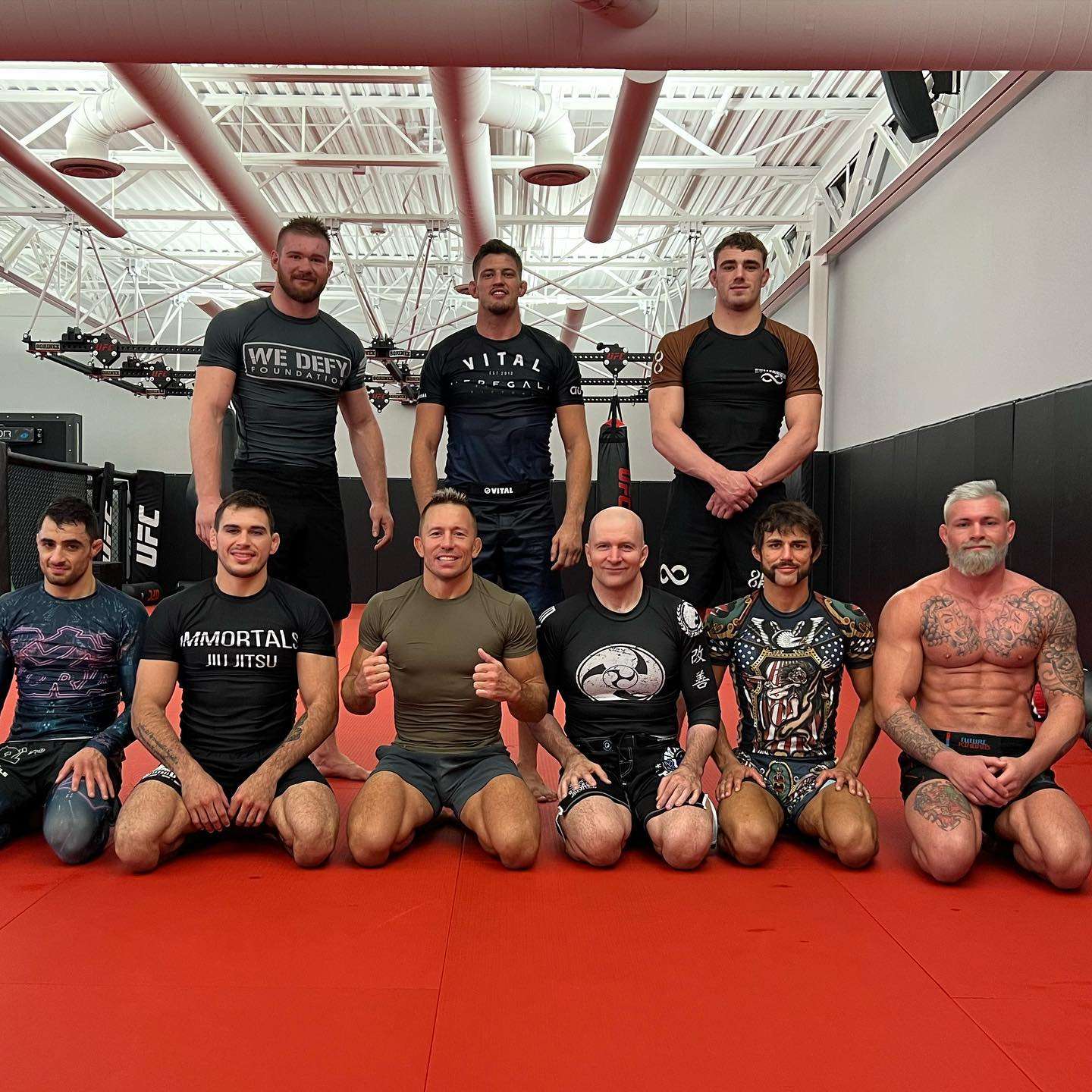
New Wave Preparing for ADCC. Source: John Danaher's Facebook
One of the key factors in New Wave’s decision was their close personal ties to ADCC head organizer Mo Jassim. Their relationship with Jassim goes beyond professional respect; they are very close, often spending time together outside the competition circuit. Competing in CJI could have been seen as a betrayal of that friendship—something far more significant than simply switching tournaments.
Their loyalty to Jassim and their longstanding ties with ADCC heavily influenced their decision to abstain from CJI, even with a potentially life-changing financial reward at stake. The complex dynamics between New Wave, Craig Jones, and his academy, the B-Team, also played a crucial role in their choice. For New Wave, the decision wasn’t just about the money; it was about maintaining integrity in their personal and professional relationships.
Despite the absence of key teams like New Wave, those who competed at CJI encountered more than just financial rewards—they found themselves in an arena that redefined the boundaries of the sport, both literally and figuratively. The innovations introduced at CJI, particularly in how it addressed the chaotic and dangerous out-of-bounds scenarios, highlighted that this event was about more than just prize money; it was about evolving the very nature of competition.
Boundaries Redefined: CJI’s Solution to Out-of-Bounds Chaos
While the $1 million prize was the main draw that lured many top athletes away from ADCC to the CJI, the event distinguished itself with a unique innovation: The Alley. This new competitive environment offered a solution to a long-standing issue in submission grappling—chaotic and dangerous out-of-bounds scenarios.
At ADCC, the unforgiving mats often led to risky situations when competitors were encouraged to keep fighting even if they went out of bounds. These scenarios frequently resulted in collisions with chairs, tables, and even the concrete floor, highlighting the inherent dangers in ADCC’s approach.
In contrast, CJI introduced The Alley—a competition space inspired by Karate Combat’s Pit. The Alley’s slanted walls not only prevented out-of-bounds scenarios but also required athletes to adapt, demanding enhanced positional control and a new level of spatial awareness.
Matches like Kade Ruotolo vs. Andrew Tackett or Luke Rockhold vs. Pat Downey showcased how The Alley enabled continuous action within a controlled space, minimizing the risks of injury and maintaining the intensity of the competition.
Figure 3: Kade Ruotolo vs. Andrew Tackett at CJI 2024
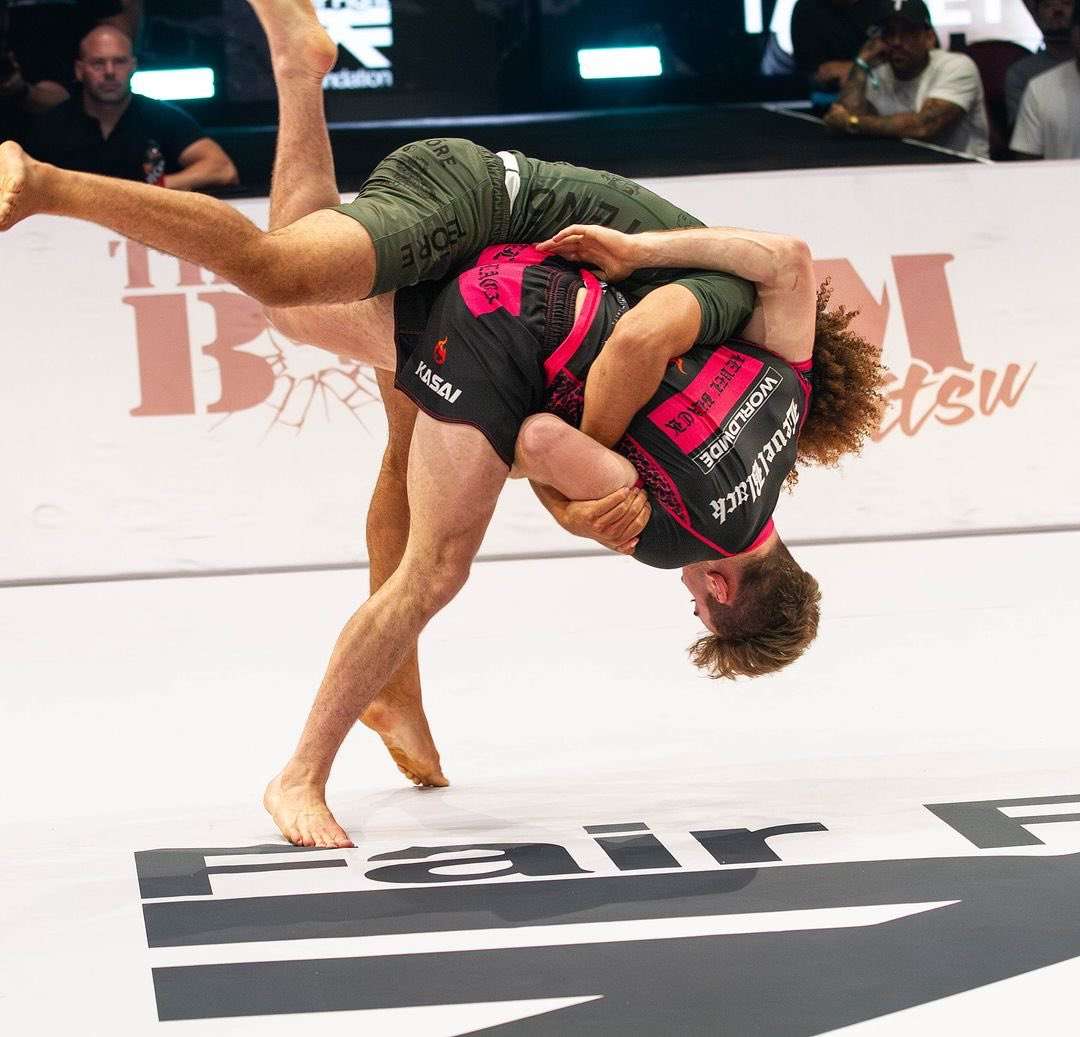
Kade Ruotolo vs Andrew Tackett at CJI. Source: Craig Jones Invitational, Fair Fight Foundation
The innovations introduced by CJI were not merely cosmetic changes; they symbolized a deeper transformation within the sport. As CJI addressed long-standing issues in grappling, it also set the stage for what the future of submission grappling could look like—a future where athlete safety, innovation, and fair compensation are at the core of the competition.
Conclusion: A New Standard Set by CJI—But Will It Last?
The CJI has undeniably set a new benchmark in submission grappling, captivating millions worldwide with its innovative approach and substantial financial rewards. With a staggering 65 million views across social media, YouTube, and live streams, CJI has shown that the sport is not just ready for change—it’s hungry for it. By challenging the status quo, CJI has pushed ADCC and other organizations to reconsider how they value and compensate athletes.
Figure 4: Craig Jones Invitational 2024 Champions
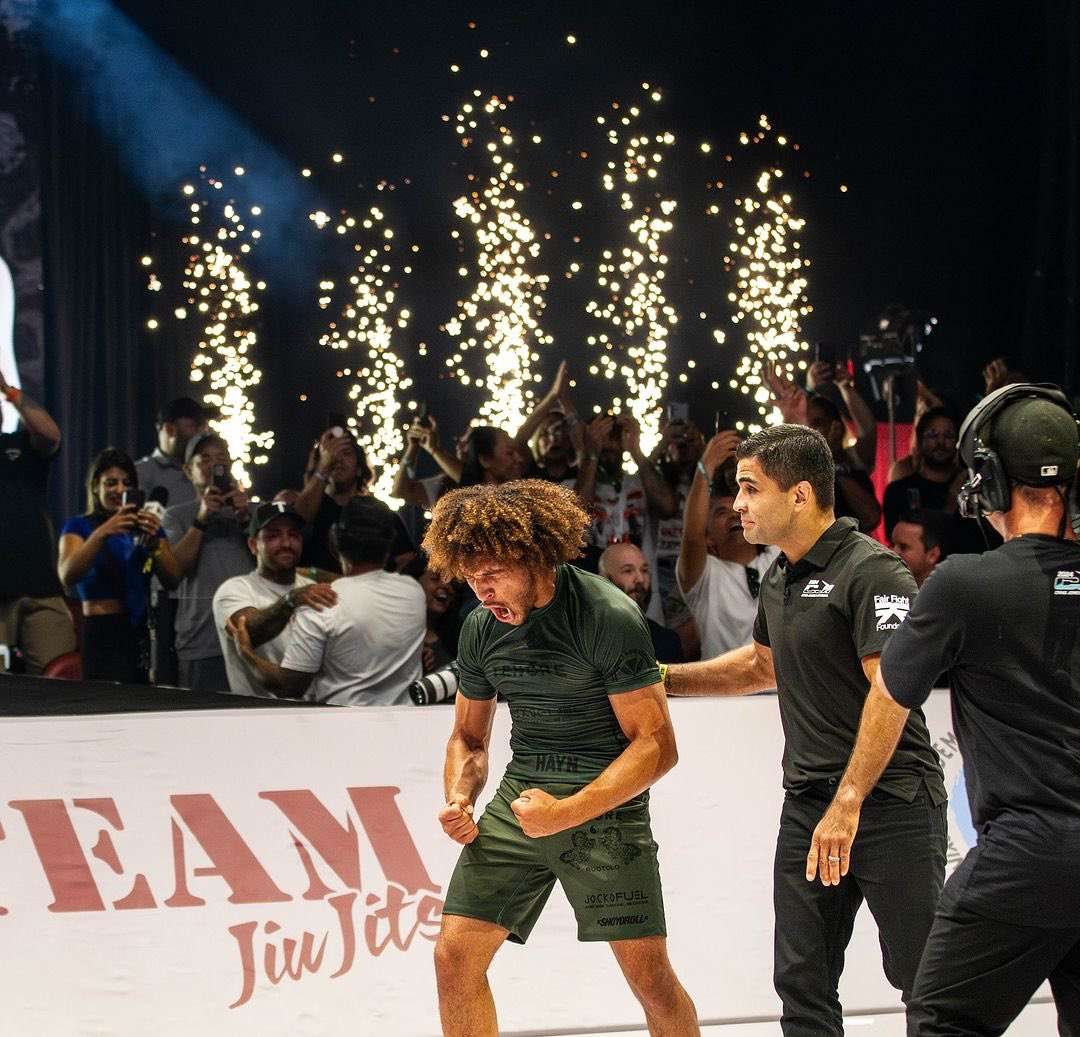
Kade Ruotolo -80 KG CJI Champion. Source: Craig Jones Invitational, Fair Fight Foundation
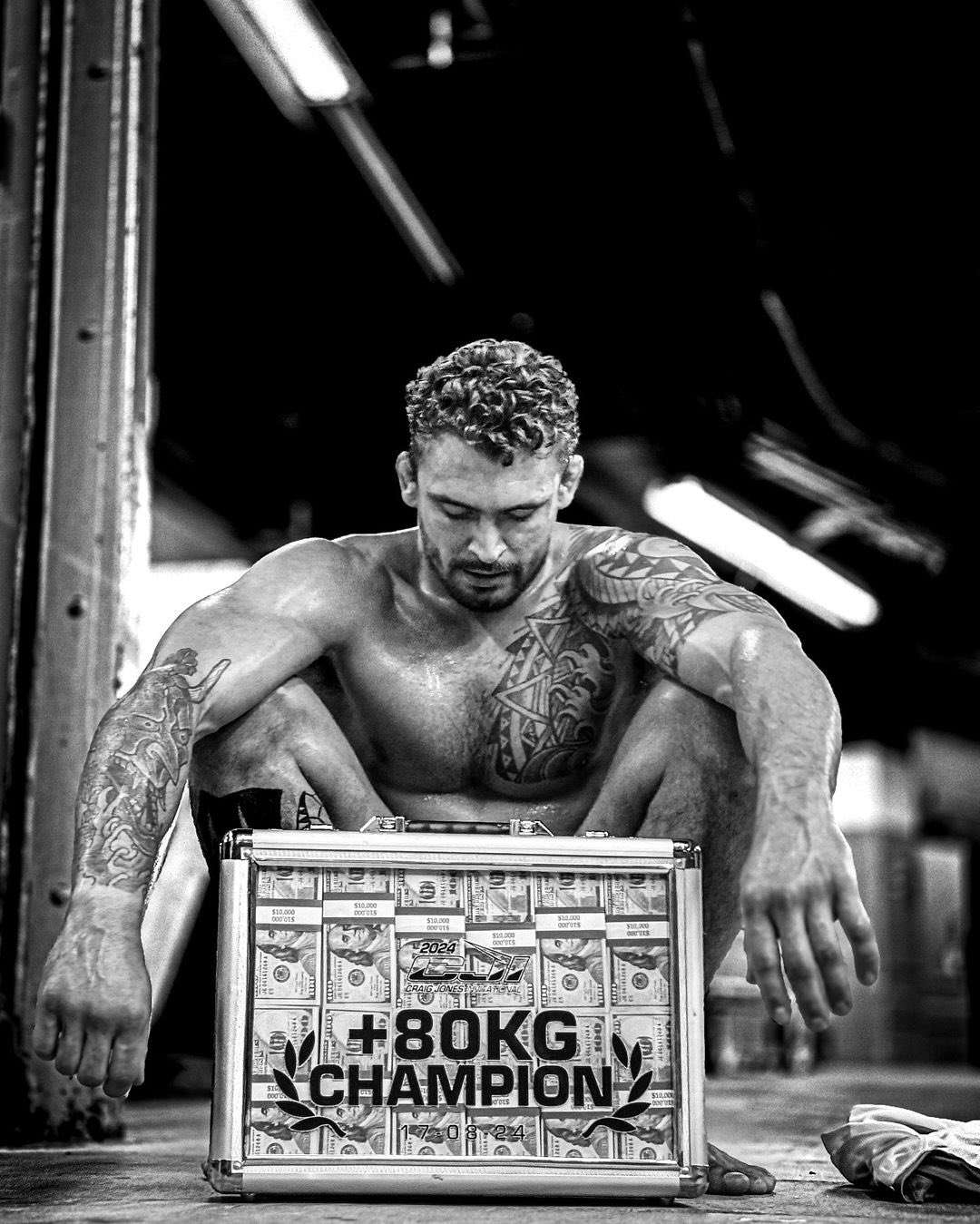
Nicky Rod +80 KG CJI Champion. Source: Craig Jones Invitational, Fair Fight Foundation
However, as this new era unfolds, it brings with it uncertainties: Can CJI sustain its model with anonymous funding? Craig Jones has expressed his intent to host this tournament annually with the same impressive cash prize, but the identity of the funding source remains undisclosed. Speculation suggests this financial backing could be tied to the same crypto-based funders behind Karate Combat, particularly given the parallels between CJI's "Alley" and Karate Combat's "Pit," with Karate Combat reportedly fully funded by cryptocurrency.
This potential connection raises valid concerns about the tournament's long-term viability, especially given its reliance on a single, unidentified backer. If this funding were to cease, it could jeopardize the future of CJI and its influence on the sport. We encourage our readers to critically consider the risks associated with this single point of failure.
Adding another layer of complexity is the scheduling conflict that marked this year's event. ADCC, being a biennial tournament, typically enjoys a unique position in the submission grappling calendar. In contrast, CJI is planned as an annual event, meaning that the protest effect observed this year—where CJI was held on the same exact day as ADCC—might not recur in the same way. It remains to be seen whether Craig Jones will continue to host future CJIs on the same dates as ADCC, or if he will choose a different strategy. How this plays out could significantly impact both events and the broader landscape of submission grappling.
As submission grappling continues to evolve, the sport faces a crucial decision: adapt to these new standards or risk being eclipsed by emerging competitors. For athletes, fans, and organizers alike, the future hinges on embracing innovation while safeguarding the sport’s foundational principles.
In the end, CJI has done more than offer an alternative—it has issued a challenge to the entire submission grappling community. The pressing question now is, will the sport rise to meet it?
Ready to take your martial arts journey to the next level? Unleash your potential at Ground Game Theory, Miami's premier martial arts academy for No Gi Jiu Jitsu and Mixed Martial Arts (MMA) of all ages and skill levels. Whether you're interested in taking Jiu Jitsu classes recreationally, the dynamic challenge of competitive submission grappling, or seeking the best martial art for self-defense, we have something for everyone.
Don't miss out on the opportunity to learn from experienced instructors in a supportive community. Click here to sign up for a free trial class and see why we're the premier martial arts academy in Miami, FL for jiu jitsu for kids and adults alike. Learn more by following any of the links below ↓
Website: groundgametheory.com
Instagram: instagram.com/groundgametheory
Facebook: facebook.com/GroundGameTheory
YouTube: youtube.com/@groundgametheory
Tik Tok: tiktok.com/@groundgametheory
Threads: https://www.threads.net/@groundgametheory
X: x.com/GGT_Miami