
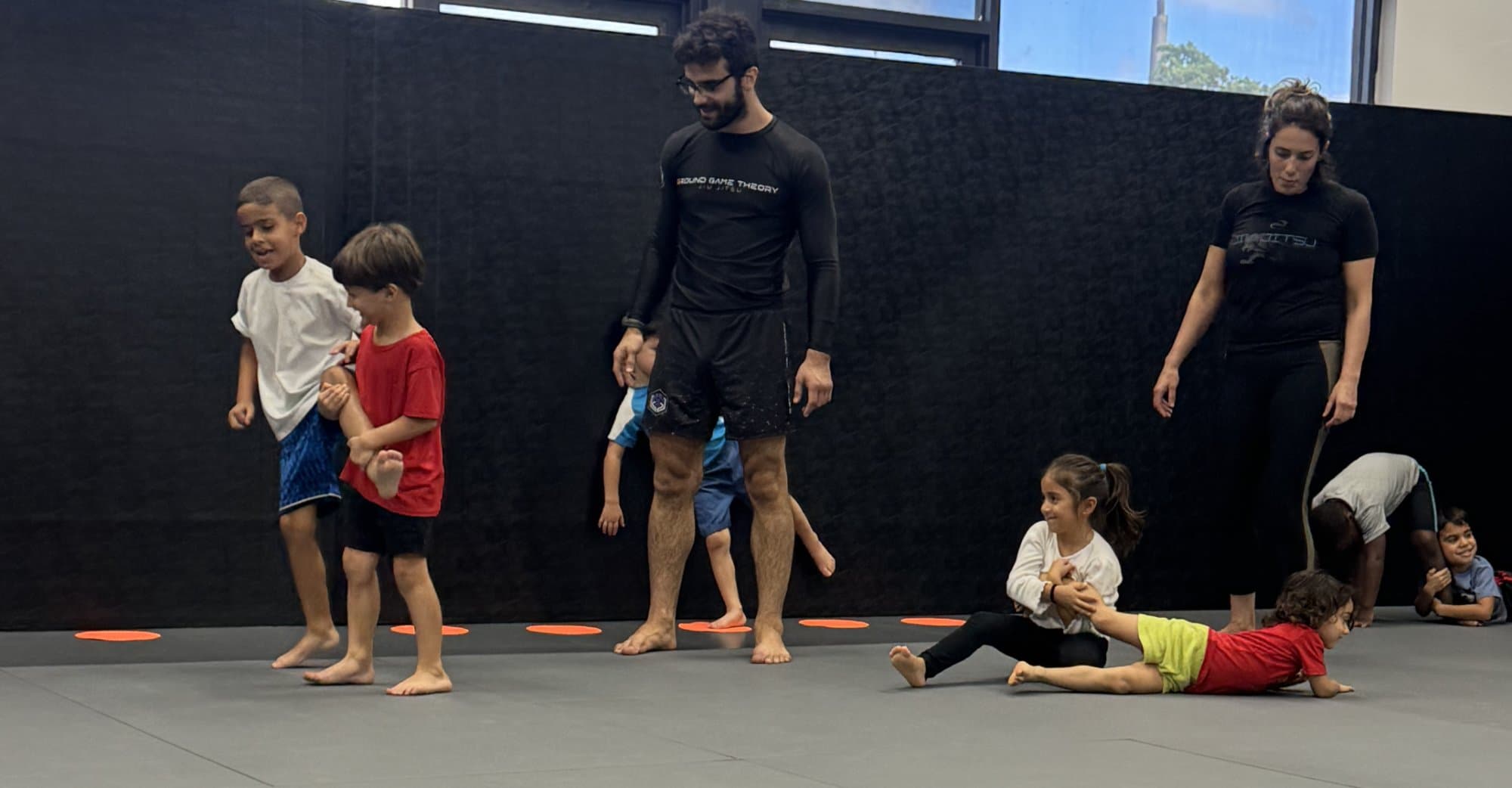
It's easy to understand why so many parents are interested in enrolling their children in jiu jitsu.
Beyond learning practical self-defense skills, kids can develop confidence, discipline, resilience, and the ability to work effectively with others. For parents, kids jiu jitsu classes also provide something equally valuable: a consistent outlet for their child's energy and a little breathing room in an otherwise busy week.
One of the most common questions we hear from parents is:
"What is the best age for kids to start jiu jitsu?"
The truth is that the right age has less to do with your child's birthday and more to do with their individual development. Factors such as attention span, emotional maturity, ability to follow directions, and comfort participating in a group setting are often more important than the number of candles on their birthday cake.
Many parents worry that their child is "behind" if they don't start early. But jiu jitsu isn't a race. Starting at four years old isn't an advantage if a child quits at five. A child who starts later and trains consistently will often gain far more than a child who starts early but isn't ready to stick with it.
Some children are ready to begin jiu jitsu at four years old. Others may benefit from waiting until they're seven, eight, or even older. Starting early isn't automatically better. What's most important is that your child is ready to learn in a safe, supportive, and age-appropriate environment.
In this article, we'll explore the key factors that can help you determine whether your child is ready to begin their jiu jitsu journey.
How to Know If Your Child Is Ready for Jiu Jitsu
Many parents enroll their children in kids jiu jitsu classes because they want to improve their focus, confidence, discipline, or emotional regulation.
A quality kids martial arts program can help develop these qualities over time. Your child doesn't need to arrive with them already.
However, if your child cannot participate safely in a group setting, becomes extremely distressed by physical contact, or consistently struggles to engage despite guidance and redirection, waiting a little longer may lead to a better experience.
Before signing up for your first class, consider the following questions.
1. Can Your Child Participate in a Group Setting?
Your child doesn't need perfect behavior to start jiu jitsu. A good kids program should expect children to be children.
Kids will get distracted. They will make mistakes. They will need reminders and redirection. That's normal.
What matters is whether they can participate safely with coaches and classmates while gradually learning to function in a group environment.
If a child consistently refuses to participate, creates ongoing safety concerns, or prevents others from learning, they may benefit from waiting a little longer before starting.
2. Can Your Child Handle Physical Contact?
Unlike many youth sports and activities, jiu jitsu for kids involves regular physical contact.
Feeling hesitant or uncomfortable at first is normal. What matters is whether your child can participate despite those feelings.
If physical contact consistently causes significant distress, anxiety, or prevents them from participating in class, waiting a little longer may lead to a better experience.
A quality instructor can help determine whether your child is ready and recommend the best path forward.
3. Is Your Child Open to Trying Jiu Jitsu?
Many parents assume that if their child complains about attending class, the activity must not be a good fit.
In reality, it's rarely that simple.
Children often resist activities that require effort, patience, and delayed gratification, especially when those activities compete with highly stimulating alternatives like video games, YouTube, social media, or television.
A child saying, "I don't want to go," isn't always communicating a dislike for jiu jitsu. Sometimes they're communicating that they would rather continue doing something easier and more immediately rewarding.
That doesn't mean parents should force children into activities they genuinely hate. But it does mean that occasional resistance isn't necessarily a reason to quit.
Instead of focusing only on what your child says before class, pay attention to how they respond once they arrive.
Do they participate? Do they smile? Do they talk about class afterward?
Many children who complain before class end up having a great time once training begins.
4. How Should Parents Approach Their Child's Training?
Jiu jitsu should be an opportunity for your child to grow, learn, and challenge themselves.
Children benefit from being challenged to do difficult things and follow through on their commitments. They also benefit from having the space to develop at their own pace.
The best parents challenge their children while paying attention to their experience.
Challenge them. Support them. Listen to them.
When approached with the right mindset, jiu jitsu can become a powerful tool for personal growth that extends far beyond the mats.
5. What Makes a Good Kids Jiu Jitsu Program?
Even if your child is ready to start training, the quality of the program still matters.
A great kids jiu jitsu program should be:
Safe
Engaging
Age-appropriate
Fun
Young children generally learn best through games, guided challenges, and interactive activities rather than lengthy lectures or memorization-based instruction.
When evaluating a school, pay attention to how coaches interact with students, how engaged the children appear, and whether the environment feels positive and supportive.
The right program can make a tremendous difference in whether a child enjoys training and sticks with it long enough to experience the benefits jiu jitsu has to offer.
Is Jiu Jitsu Right for Every Child?
Despite what many practitioners claim, jiu jitsu isn't necessarily the right activity for every child.
Some children immediately fall in love with the physical challenge, problem-solving, and rough-and-tumble play that jiu jitsu provides. Others may be drawn to a different activity or simply need more time before they're ready.
That's perfectly normal
The qualities most parents hope to develop through jiu jitsu aren't created by jiu jitsu itself. They're developed through consistently engaging with meaningful challenges.
Jiu jitsu happens to be an excellent vehicle for that process, but it isn't the only one.
The real goal is helping your child find healthy pursuits that challenge them, reward effort, and keep them growing over time. If jiu jitsu becomes one of those pursuits, it can be one of the most rewarding activities a child ever experiences.
About the Author
Carlmichael Leiva is the Head Coach and Co-Founder of Ground Game Theory, a no-gi jiu jitsu academy in Miami, Florida. He began grappling in 2012 as a wrestler before transitioning to Brazilian Jiu Jitsu in 2014. Drawing from his background in research and over a decade of coaching and competition experience, Carlmichael focuses on skill acquisition, athlete development, and evidence-informed approaches to grappling coaching.
Ready to see if jiu jitsu is a good fit for your child? Ground Game Theory offers programs for children ages 4-6 and 7-12 designed to help kids build confidence, develop valuable life skills, and have fun in a safe and supportive environment. Claim your free one-week trial or follow our Kids Jiu Jitsu Miami Instagram page for training clips, student highlights, and academy updates.
Learn more
Kids Jiu Jitsu Program: https://www.groundgametheory.com/offerings/kids-jiu-jitsu-miami/
Kids Jiu Jitsu Instagram: https://www.instagram.com/kidsjiujitsumiami
Facebook: facebook.com/GroundGameTheory
YouTube: https://www.youtube.com/@GroundGameTheory